Best Time to See Autumn Leaves in Japan: 2026 Peak Dates
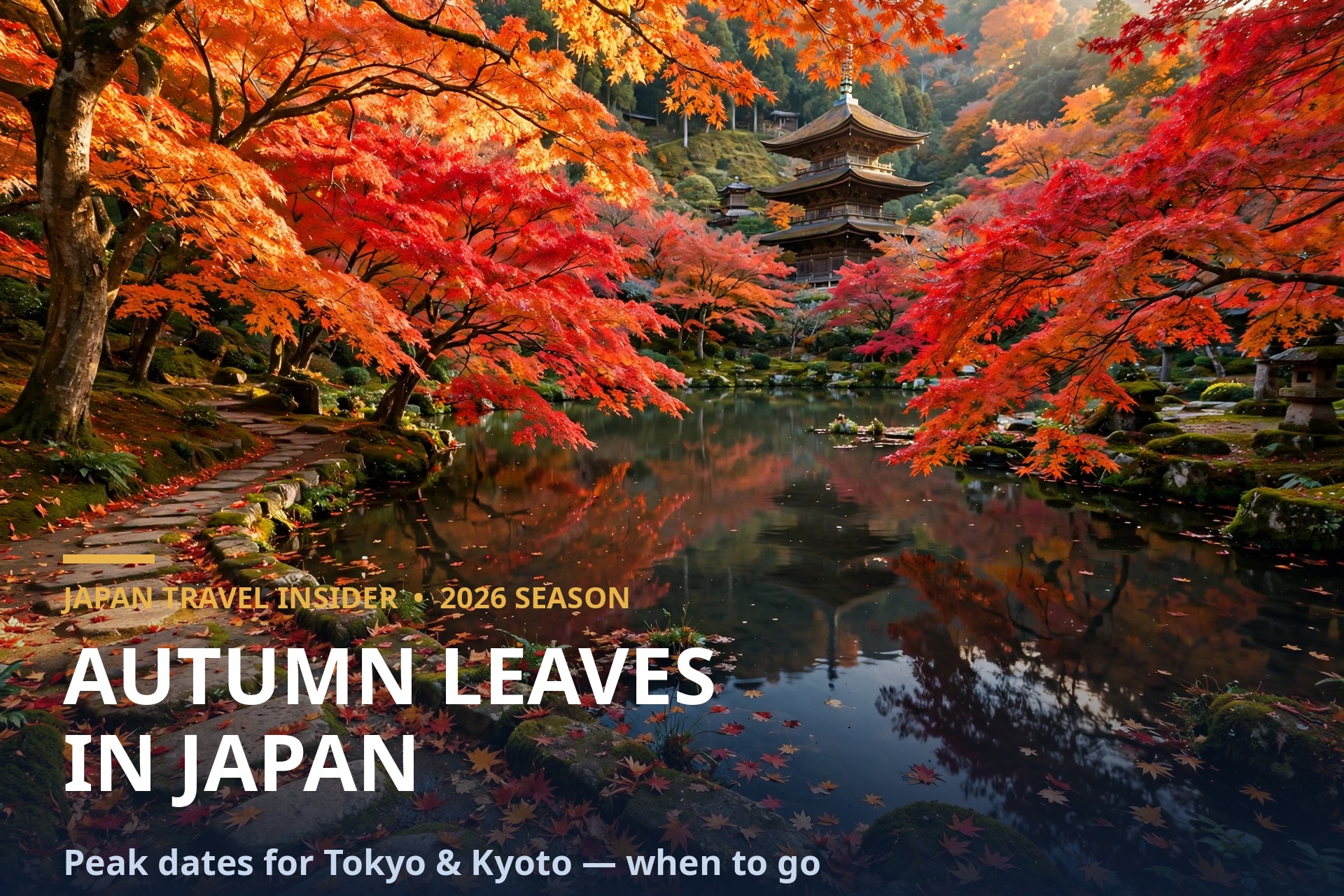
If you're landing in Japan in the next two weeks, you picked your dates well. The autumn leaves — koyo — are peaking in the big cities right now, and because 2026 is running a little late, the season stretches further into December than usual. Here are the official peak dates for Tokyo, Kyoto and the rest of the classic route, where the color is best this week, and how to enjoy it without spending your trip in a crowd.
The short answer: the 2026 peak dates
Japan's foliage forecasts come from the Japan Meteorological Corporation, which released its final 2026 forecast on November 4. These are the dates its official sample maple in each city is expected to reach full color:
| City | Maple full color (2026 forecast) |
|---|---|
| Tokyo | November 30 |
| Hiroshima (for Miyajima) | November 30 |
| Osaka | December 6 |
| Fukuoka | December 10 |
| Kyoto | December 14 |
Two things to know about these dates. First, they mark full color on one official tree, which happens near the end of the best viewing window — gardens and temple grounds usually look their best starting about a week earlier. Second, Kyoto is the outlier: December 14 is nine days later than its long-term average, thanks to a warm autumn. The golden ginkgo trees run earlier than the maples, with Tokyo's ginkgo forecast for November 29. Put it together and the sweet spot for a first trip that covers both Tokyo and Kyoto is roughly November 20 to December 3 — which, conveniently, starts today.
Where the leaves are at right now
Forecasts are one thing; the trees are another. The Japan Weather Association (tenki.jp) publishes live color reports from famous spots, and as of November 19 the season is very much on:
- Tofuku-ji in Kyoto — at peak. Its maple-filled valley is one of the great koyo sights in the country.
- Arashiyama, Kyoto — tenki.jp's fourth forecast (November 11) put the start of its peak at November 17, so the riverside and Tenryu-ji's garden are in their best stretch now.
- Kenroku-en in Kanazawa — at peak, maples glowing under the garden's famous snow ropes.
- Tokyo — the ginkgo avenue at Meiji Jingu Gaien and the slopes of Mount Takao are at peak. The city gardens, like Rikugien, follow in early December.
- Coming next in Kyoto — Weathernews expects Kiyomizu-dera from around November 23 and Eikando from around November 24.
And one honest warning: the north is done. Hokkaido, the Tohoku gorges and Nikko's mountains peaked in October and are past their best. If leaves are your main reason for coming, keep your base in the Tokyo–Kyoto corridor and points south. I post these color updates as they come in on X (@KenseiInsider), and I keep photo boards of the spots on Pinterest so you can see what each place actually looks like in season.
How to enjoy koyo without the crowds
Peak season in Kyoto gets genuinely busy — the famous temples can feel like a concert queue by midday. A few habits make all the difference, especially if you're traveling solo and want the calm version of this season:
- Go at opening time. Temple gardens at 9 a.m. on a weekday are a different world from the same garden at noon. Soft light, empty paths, room to linger.
- Save one evening for a night illumination. Many Kyoto temples light their maples after dark during peak weeks. It's romantic, it's quiet, and nobody thinks twice about a woman walking a lit garden alone — it's one of the most normal solo outings in Japan.
- Trade one famous temple for one quiet garden. For every Eikando on your list, add a smaller garden the tour buses skip. The color is the same; the breathing room is not.
- Check the live reports each morning. Color can shift by days with the weather. The tenki.jp spot pages update daily through the season — an eSIM that works from the moment you land (#ad) makes that a two-minute breakfast habit instead of a hotel-Wi-Fi scramble.
Getting between the colors
The classic leaf route — Tokyo, a night or two in Kanazawa or the mountains, then Kyoto and Osaka — is a lot of shinkansen rides in a short week. If your itinerary stacks up three or more long-distance legs, price out a Japan Rail Pass (#ad) against single tickets before you arrive; on a koyo route like this, the pass often wins, and it frees you to add a spontaneous day trip when a report says a spot just peaked. For Kyoto itself, stay within walking distance of a subway or Keihan-line station rather than chasing the cheapest room across town — you can compare stays near Kyoto's central stations here (#ad). Early starts are much easier when the station is five minutes away, not forty.
I keep the longer version of this season's guide — spot-by-spot notes, which temples now ask for reservations, and the order I'd walk them in — in my Japan Travel Insider notes. Start from the index post on note (my full archive is on my note profile), and if you prefer printable PDFs to read offline on the train, the full guides are on my Gumroad store.
The bottom line
The best time to see autumn leaves in Japan in 2026 is right now through the first week of December: Tokyo's maples peak around November 30, Kyoto's temples through the last week of November, and the city's official full color holds to mid-December. Go early in the day, check the live reports, and let one quiet garden balance every famous temple. For the longer seasonal guides and the questions readers send me, I also write on Medium. For more daily Japan travel notes, head back to the Japan Travel Insider page — and enjoy the red while it lasts.